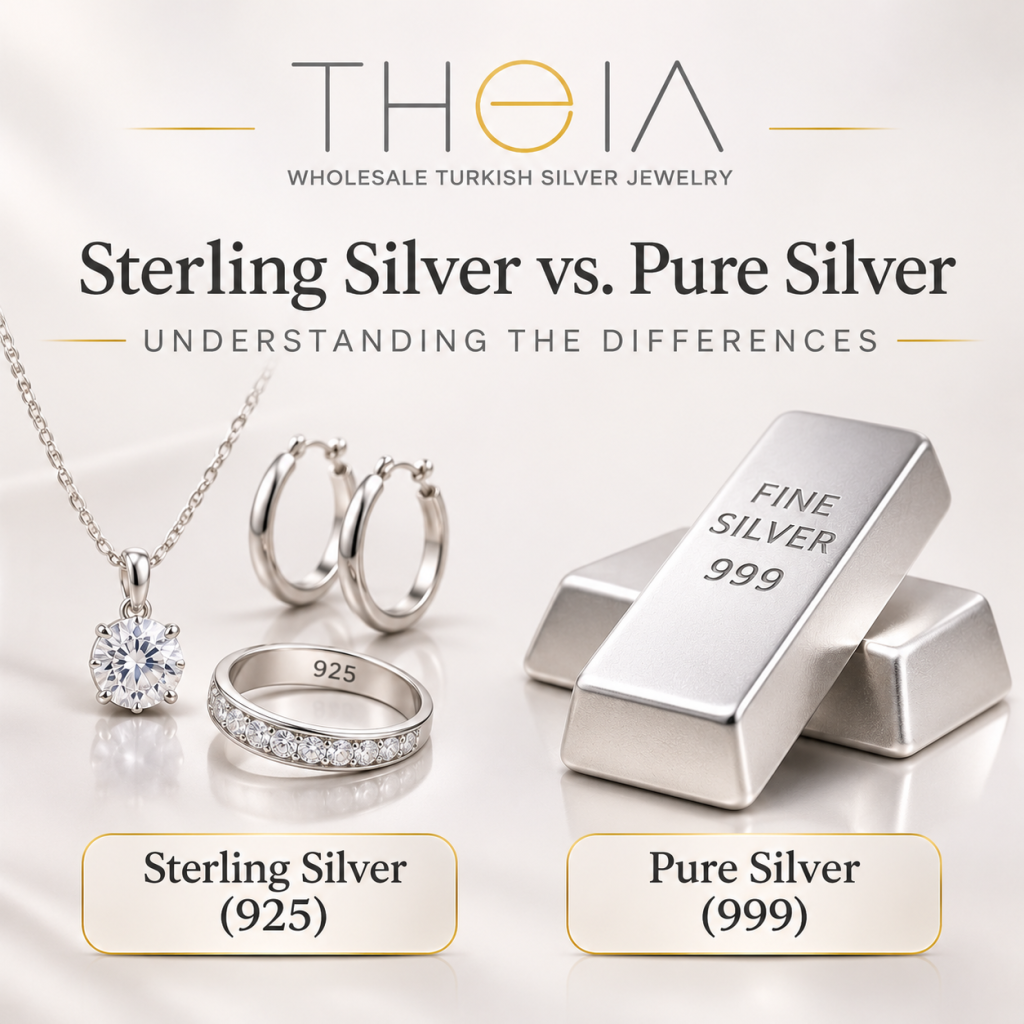
Silver has been valued for centuries for its beauty, versatility, and use in jewelry making. However, not all silver is the same. Two of the most commonly discussed types are pure silver and 925 sterling silver.
Although both contain a high percentage of silver, they differ in composition, durability, workability, and suitability for jewelry production.
Understanding these differences is important for jewelry retailers, wholesalers, designers, and anyone involved in the silver jewelry industry.
1. What Is Pure Silver?
Pure silver, also known as fine silver, typically contains 99.9% silver. It is commonly marked with the numbers 999 or .999, indicating its high silver content.
Because it contains very few additional metals, pure silver has a naturally bright, soft appearance and excellent malleability.
However, its softness makes it less suitable for many types of everyday jewelry. It can bend, scratch, and lose its original shape more easily than silver alloys.
Pure silver is commonly used in:
- Silver bars and investment products
- Collectible silver items
- Certain decorative objects
- Selected jewelry designs where softness is not a major concern
2. What Is 925 Sterling Silver?
925 sterling silver is an alloy containing 92.5% pure silver and 7.5% other metals, most commonly copper.
The additional metals improve the material’s strength and durability while maintaining the attractive appearance and valuable properties of silver.
Sterling silver is widely used in the jewelry industry because it offers a practical balance between silver content, workability, and durability.
It is commonly used to manufacture:
- Rings and wedding jewelry
- Necklaces and pendants
- Earrings and bracelets
- Chains and decorative jewelry components
- Detailed and stone-set jewelry designs
The 925 hallmark indicates that the alloy contains at least 92.5% silver, subject to applicable hallmarking standards.
3. Sterling Silver vs. Pure Silver: Key Differences
The main difference between these two materials is their silver content and mechanical properties.
| Feature | Pure Silver (999) | Sterling Silver (925) |
|---|---|---|
| Silver content | 99.9% | 92.5% |
| Other metals | Typically 0.1% or less | 7.5% |
| Hardness | Relatively soft | Harder and more durable |
| Scratch resistance | Lower | Generally higher |
| Workability | Very malleable | Suitable for detailed jewelry production |
| Common use | Investment and decorative products | Jewelry manufacturing |
While pure silver offers a higher silver content, sterling silver is generally more practical for jewelry designs that require strength and structural stability.
4. Why Is 925 Sterling Silver More Commonly Used in Jewelry?
Jewelry must maintain its shape and withstand regular handling. This is particularly important for rings, bracelets, earrings, and other pieces exposed to frequent movement or contact.
Pure silver is relatively soft, which can make certain jewelry designs more vulnerable to bending and surface damage.
The addition of other metals, particularly copper, gives sterling silver improved mechanical strength.
This makes 925 sterling silver a suitable material for:
- Intricate jewelry designs
- Stone-setting applications
- Everyday jewelry collections
- Lightweight and detailed components
- Different finishing and plating applications
For jewelry manufacturers and wholesalers, the balance between silver purity and durability makes 925 sterling silver an important material in the global jewelry market.
5. Does Pure Silver Tarnish Less Than Sterling Silver?
Both pure silver and sterling silver can tarnish over time, but they do not react in exactly the same way.
Tarnishing occurs when silver reacts with sulfur-containing compounds in its environment, forming a dark surface layer known as silver sulfide.
Pure silver generally tarnishes more slowly because it contains very little copper or other alloying metals.
Sterling silver may tarnish more readily because of the additional metals in its composition, particularly copper.
Several environmental factors can influence tarnishing:
- Humidity and moisture
- Exposure to perfumes and cosmetics
- Contact with household chemicals
- Airborne sulfur compounds
- Improper storage conditions
Proper storage, regular cleaning, and appropriate jewelry care can help maintain the appearance of both materials.
6. Can Sterling Silver Be Used for Gold and Rhodium Plating?
Yes. One of the advantages of 925 sterling silver is its suitability as a base material for different surface finishes.
Depending on the manufacturing process, sterling silver jewelry can receive various types of plating to achieve different colors and appearances.
Common finishes include:
Rhodium Plating
Rhodium is a precious metal from the platinum group. It can provide sterling silver jewelry with a bright, reflective, silvery-white finish and additional surface protection.
Yellow Gold Plating
Gold plating gives sterling silver jewelry a warm golden appearance while retaining sterling silver as its base material.
Rose Gold Plating
Rose gold plating creates a soft pinkish-gold appearance. Its characteristic color comes from the gold alloy used in the plating layer.
These finishing techniques allow jewelry designers and manufacturers to create diverse collections using the same sterling silver foundation.
7. Which Is Better for Jewelry Businesses: Pure Silver or Sterling Silver?
The right material depends on the intended product, design, and application.
For most conventional jewelry collections, 925 sterling silver offers several practical advantages.
Its improved strength makes it suitable for a wide range of jewelry styles, including stone-set pieces, detailed designs, and everyday accessories.
https://www.theiasilver.com/